
Choosing your first acoustic guitar isn't necessarily easy with all the options available. Rest assured, we've tested the 2025 models to bring you the best of the best, whether you're a beginner or a discerning music lover. From affordable models like the Cort Earth 70 to high-end gems like the Martin D28, you'll find key tips and an exclusive selection to help you find THE guitar that's right for you. We'll help you understand the differences between Dreadnought, Auditorium, and Parlor formats, and we'll also reveal the essential criteria to check before buying, such as the quality of the wood and the comfort of the neck.
Summary
ToggleKey points:
- The Cort Earth 70 (4.7/5) is ideal for beginners (solid spruce top, versatile comfort).
- The Gretsch Jim Dandy (4.5/5)appeals with its vintage look and round bass tones.
- Priced between €350 and €1,000, the Seagull S6 Original (4.7/5) and the Little Martin LX1 (4.8/5) offer rich sound and surprising projection.
- Above €1,000, the Martin 000-28 (4.9/5) is the premium choice offering absolute comfort.
- Opt for a solid top, check the neck, and choose according to your style(dreadnought for power, parlor for intimacy).
The best of the best: our 2025 selection at a glance
Don't have time to read everything? Here's our quick selection for all levels. Discover the best acoustic guitars of 2025 at a glance, tailored to your budget and playing style.
Summary table of the best acoustic guitars in 2025
| Model | Ideal for | Price range | Note | Strength | Link to the product |
|---|---|---|---|---|---|
| Cort Earth 70 | The demanding beginner | Less than $350 | 4.7/5 | Unbeatable value for money | See the guitar |
| Gretsch Jim Dandy G9500 | Blues & small frames | Less than $350 | 4.5/5 | Vintage sound and unique look | See the guitar |
| Seagull S6 Original | Take it to the next level | $350–$1,000 | 4.7/5 | Handcrafted in Canada, its rich | See the guitar |
| Little Martin LX1 | The nomadic musician | $350–$1,000 | 4.8/5 | Impressive sound projection for its size | See the guitar |
| Martin 000-28 | The investment of a lifetime | Over €1,000 | 4.9/5 | Ultimate comfort and versatility | See the guitar |
| Martin D28 | The benchmark Dreadnought sound | Over €1,000 | 4.8/5 | Legendary power and balance | See the guitar |
The best acoustic guitars for those on a budget (under $400)
Cort Earth 70: the essential choice for beginners
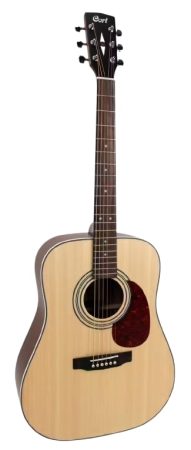
Want to get started without breaking the bank? The Cort Earth 20 is made for you. With its solid spruce top and ultra-smooth mahogany neck, it offers rich sound and easy learning. Its classic dreadnought body provides great power, ideal for rhythm chords.
Whether you play folk music or accompany your singing, it adapts to all styles. Learning to play the guitar on your own is easy thanks to its playability. At this price, you don't need to look any further. Its balanced craftsmanship guarantees a consistent sound.
Advantages: solid spruce table, ultra-comfortable neck, versatile for all styles.
Disadvantages: Basic finishes, but that's to be expected at this price point.
Gretsch Jim Dandy G9500: vintage look and sound
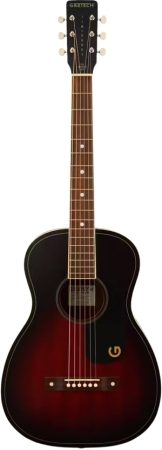
Who said that an inexpensive guitar couldn't be stylish? The Gretsch Jim Dandy G9500 in Parlor format captivates with its retro design. Perfect for small hands thanks to its smaller body, ideal for intimate acoustic performances.
Its sound is a real joy for blues or fingerpicking. The bass notes are round, the mids clear, and the highs smooth. The mahogany body and spruce top give it a warm sound. Ideal for unplugged playing thanks to its compact size.
Advantages: comfortable Parlor format, balanced sound, vintage design.
Disadvantages: More modest volume than a dreadnought, due to its compact size.
Fender CD 60 S: a safe bet
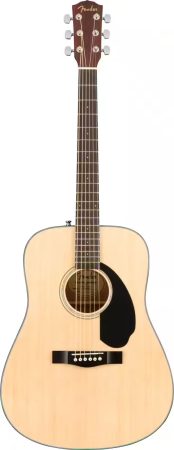
Fender, a global benchmark, offers the CD 60 S for beginners. Its "Easy to play" neck makes fingering easy, even for novices. Designed to last, it avoids frequent replacements.
With spruce and mahogany, it delivers a clear and dynamic sound. The solid spruce top and mahogany back provide a balance between lively attack and warm resonance. Perfect for covers or personal compositions.
Advantages: ultra-playable handle, high-performance, durable wood combination.
Disadvantages: Slightly heavier than some models, but this is negligible.
Lâg T70A: the French touch
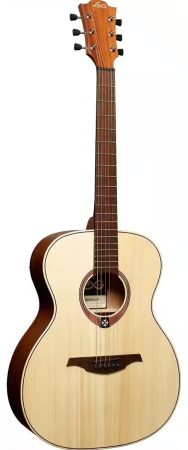
Want to support European craftsmanship? The Lâg T70A offers surprising sound thanks to its solid Engelmann spruce top. Each note has a depth rarely found in this price range.
Designed in France with a sapele back and sides (similar to mahogany), it offers a comfortable neck and rich sound. The "Open Pores" finish accentuates the resonance. Perfect for music lovers who want a lively sound without breaking the bank.
Advantages: high-quality Engelmann spruce, meticulous construction, warm sound.
Disadvantages: "Open Pores" finish that marks easily, but optimizes resonance.
Yamaha FG800: power and reliability
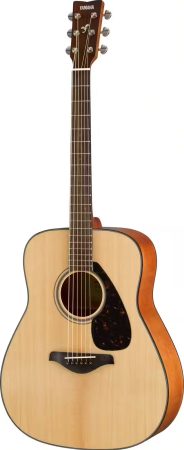
With its solid spruce top and nato back, the Yamaha FG800 delivers powerful sound. Its scalloped bracing structure improves projection, ideal for singer-songwriters. Its dreadnought body ensures beautiful power.
The spruce/nato combination produces a dynamic sound, with strong bass and clear treble. Perfect for accompanying vocals or playing in a group without amplification.
Advantages: powerful sound projection, legendary reliability, suitable for vocals.
Disadvantages: Basic hardware, but durable in the long term.
Moving up the range: gems between €350 and €1,000
Takamine GD 20 NS: the queen of versatility
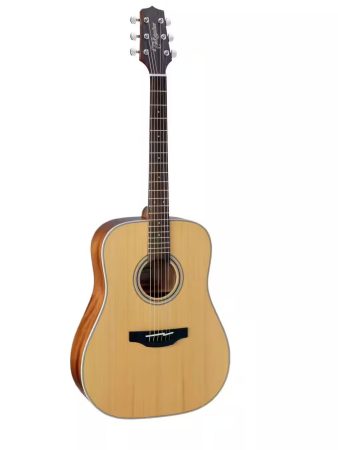
The Takamine GD 20 NS is the perfect example of good value for money. Suitable for both rhythm and fingerpicking, its solid spruce top and mahogany sides enhance the warmth of the sound. Its C-shaped neck remains comfortable even after long sessions. You'll notice the improvement in quality: each note is clearer, each chord more lively. Its satin finish prevents glare on stage, and its sturdiness limits the need for adjustments after each session. What's surprising is its traditional dovetail neck/body joint. This improves sound transfer for a purer tone. You can feel it as soon as you strike the body: the sound is richer and more projected. It's a detail that makes all the difference.
Little Martin LX1: big sound in a small body
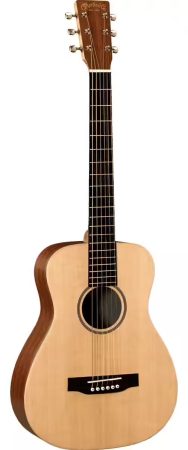
The Little Martin LX1 is ideal if you want a portable but high-performance instrument. Despite its 3/4 size, its solid Sitka spruce top provides surprising sound projection. Its Stratabond neck and Richlite fingerboard offer rock-solid durability. You can take it anywhere, and it stays in tune even after traveling. It holds up well in the studio or on stage. Its strength also lies in its use by artists such as Ed Sheeran and Vianney. You can see this as social proof: if these pros use it, it must be because the sound delivers on its promises. And with good reason: its bass is present, the mids are clear, and the highs are sparkling. Not bad for a mini guitar, right?
- Ultra-convenient travel size.
- Rich, powerful sound by Martin.
- Very easy to play handle.
- Comes with a high-quality cover.
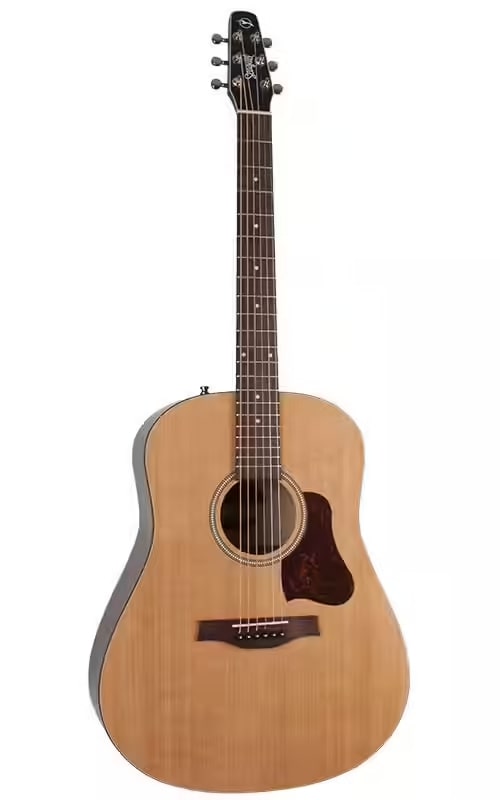
Seagull S6 Original: Canadian craftsmanship
The holy grail for guitarists: models costing over €1,000
Do you dream of owning a guitar that will be with you for the rest of your life?
The models presented here are global benchmarks. Their sound, history, and craftsmanship make them treasures that collectors and professional musicians covet. It's not just an instrument, it's a faithful companion for your entire musical career.
Sigma S000R-28V: the Martin spirit at an affordable price
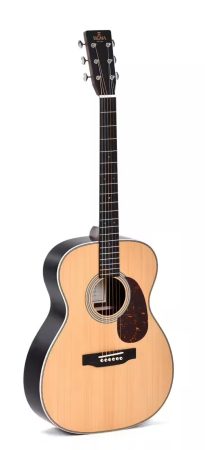
Sigma is Martin's other face. Created by the American brand in the 1970s, this series now offers models made in China that echo the style of their big sisters. The S000R-28V is one of them. It's like holding a piece of America in your hands.
Made from solid spruce and rosewood, this guitar is directly inspired by Martin designs. Its scalloped X bracing lightens the top for a richer, warmer, and more responsive sound. If you're looking for an affordable alternative to the D28, this is the guitar for you. And don't worry, despite its price, it's every bit as good as the big names: its tonal balance is impressive.
Martin D28 2025: the legend of Dreadnought sound
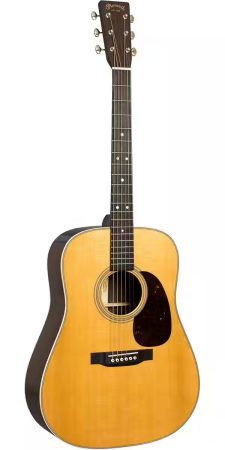
It is impossible to talk about acoustic guitars without mentioning the D28. It has been THE benchmark for bluegrass and folk music since the 1930s. It has even been played by some of the world's best guitarists, such as Tony Rice and Clarence White.
Its secret? A combination of fine woods (Sitka spruce and Indian rosewood) and an offset X-brace. The latter provides intense sound projection, perfect for unamplified performances. If you play in a band, you won't be drowned out by the other instruments. It's like having a built-in megaphone.
But be careful: at this price point, you're investing in a legacy. Each model develops character over time, much like a fine wine. And in terms of looks, its classic design stands the test of time without batting an eyelid.
Martin 000-28: absolute versatility and comfort
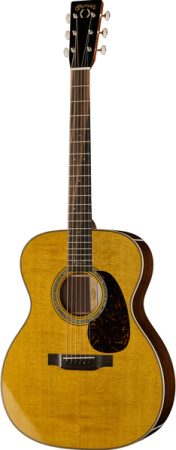
The 000-28 is the discreet model that has it all. Its "Auditorium" format (more compact than the Dreadnought) makes it accessible to all sizes. The short scale length and "C" neck make complex chords easier, especially if you play for long periods of time. Your fingers will stay fresh even after hours of rehearsal.
Its sound is a blend of majestic bass, deep midrange, and sparkling treble. It shines equally well with fingerpicking and energetic strumming. In the studio, it's a must-have for capturing precise nuances. Playing something soft? It's there. Playing fast chords? It keeps up.
Martin redesigned this model in 2018. The result is a balance between modernity and tradition. The herringbone inlays and scalloped X-brace recall its heritage, while the GE modified low oval neck profile modernizes the ergonomics. It's the kind of detail that makes all the difference when you play.
How to choose YOUR acoustic guitar: a guide to help you make the right choice
Dreadnought, Auditorium, Parlor... which body shape for which sound?
The shape of the body defines your sound and comfort. The Dreadnought remains a must-have for its volume, ideal for folk or country music. Models such as the Yamaha FG800 offer ergonomics suited to smaller hands without sacrificing sound. Its voluminous body projects well, but if you often play in the studio, the Auditorium/Grand Auditorium, such as the Fender CD 60 S, is your ally: an exceptional balance between crystal-clear highs and warm lows, perfect for fingerstyle or light rock.
The Parlor, compact and lightweight, shines in blues or intimate sessions. Its small size, as on the Gretsch Jim Dandy G9500, appeals to travelers. The Jumbo, on the other hand, is reserved for explosive stages: its XXL volume, as on the Sigma GJME, dominates amplifiers without effort. For those who value precision, the Concert/Grand Concert models, such as the Taylor 414CE-R, combine projection and balance— ideal for studio or solo work. If you often play on stage, check for a cutaway, as on the Fender Newporter Player, for easier access to the high notes.
Solid or laminated table: the secret of sound
A solid top, made from a single piece of wood, remains THE priority criterion. It vibrates better, producing a sound that matures over time. It is essential for a rich, responsive sound. Take the Martin D28: its solid Sitka spruce top produces deep bass and sparkling trebles, a must for songwriters.
Laminated tops, which are more affordable, are made up of several glued layers. They are more resistant to humidity, but the sound lacks depth. For your first purchase, opt for a solid top with a laminated back and sides: you'll get better quality without breaking the bank. The Lâg T70A, for example, combines a solid Engelmann spruce top with a nato back, offering a smart compromise between quality and price for intermediate players. Fully solid models, such as the Martin 000-28, are reserved for professionals and offer a sound that improves with age—but they require more maintenance.
Pure acoustics or electroacoustics?
Nylon string classics are excluded here. Let's focus on folk guitars. Electro-acoustic guitars feature a microphone and preamp, like the Fender CD 60SCE Black. This isa smart option if you play in a band or live. No need for an external microphone, the sound is picked up directly.
For stage performances, opt for brands such as Taylor or Gibson, whose Fishman or LR Baggs systems guarantee clear sound reproduction. Models such as the Tanglewood TWJP E use exotic woods for a vintage sound, with a precise piezo system. For those on a tight budget, the Sigma 00MSE offers a cutaway and a basic but effective preamp.
If you mainly play at home, a pure acoustic guitar like the Yamaha FG800 allows you to invest in better wood. Pros opt for hybrid systems (e.g., Fender Acoustasonic Telecaster) combining piezo and magnetic pickups for an ultra-nuanced sound.
Other things to check before buying
- The neck: Choose a C or V profile, depending on your body type. The higher the price range, the more precise the finish. Also check the width of the nut: 43mm is a good starting point, compared to 47mm on classic guitars.
- Action and intonation: Low action makes learning easier. Aim for 2 to 2.5 mm between the string and the 12th fret. Test the barre chords: if the notes sound sharp, the intonation needs to be adjusted. On the Takamine GD 20 NS, optimal factory settings prevent these hassles.
- Finish: Inspect the frets: they should not protrude from the neck. A poorly glued rosette muffles harmonics—check this detail before purchasing. The Canadian finish of the Seagull S6 Original is renowned for being impeccable.
- Accessories: A hard case protects the larger models. Some models, such as the Little Martin LX1, include a travel bag—a plus for those who are always on the go.
Beyond sound: guitar investment and the case of 12-string guitars
Can a guitar increase in value?
You may have heard of guitars that are worth a fortune. It's not enough to become an instrument trader, but some models exceed their purchase price. Martin or Gibson: their guitars made of fine wood, such as spruce or rosewood, are highly sought after. Especially in limited editions or vintage models.
Impeccable maintenance is essential. A well-preserved Martin D28 or Martin 000-28 can skyrocket in value. But beware: this is reserved for high-end models. No need to break the bank, but if you're looking to invest, go for solid wood, not laminate.
The unique sound of 12-string guitars
For an XXL sound, the 12-string guitar is your ally. Each string is doubled, creating a natural "chorus" effect. The result is a sparkling sound, as in "Hotel California" or "Wish You Were Here."
But it's not child's play. The neck is wider, the strings are tighter. Bar chords become a challenge, especially for small hands. On the other hand, once you master it, it opens up unparalleled sounds.
Frequently Asked Questions
Which brand of acoustic guitar is truly a must-have?
If you're looking for an undisputed benchmark, Martin is THE brand to know. Their expertise, especially on models such as the Martin D28 and Martin 000-28, is among the most admired by professionals and beginners alike. Their rich, powerful, and balanced sound makes them living legends. But let's not forget other strong brands: Fender with its Paramount, Seagull with its Canadian touch, and even Yamaha for its reliability. Each has its own identity, but Martin remains the gold standard.
Which guitars can increase in value over time?
It's not common, but some acoustic guitars can become treasures. These are usually high-end models from historic brands: Martin, Gibson, or even old Ovations. The secret? They must be in perfect condition, unmodified, and ideally limited editions or models that have become rare. For example, an original Martin D28 from the 1930s or a Sigma S000R-28V (manufactured by Martin himself at the time) could open the door to a nice profit. But beware, this is really a long-term investment!
What is the best-selling acoustic guitar in the world?
It's not easy to know exactly which one dominates global sales, but one thing is certain: the Yamaha FG800 has a huge share of the market! Why? Because it offers excellent sound, great reliability, and an affordable price (less than €350). It's a safe bet for beginners, but also for pros who want a backup guitar. Basically, it's the one you'll most often find in rehearsal rooms, but also on stage.
How much should you budget to buy a good acoustic guitar?
You can get off to a really good start without spending too much! For less than €350, you can find super reliable models like the Cort Earth 70 or the Gretsch Jim Dandy. But basically, if you're serious about getting started, you'll find what you're looking for between €250 and €500.
What are the reviews on Sigma guitars?
Sigma guitars are a bit like a love story between Martin and guitarists who want something heavy without breaking the bank. Created by Martin himself in the 1970s, the brand offers models such as the Sigma S000R-28V, which sound very similar to Martin guitars. Their secret? Precise assembly, solid woods (such as spruce and rosewood) and a lower price tag. However, be aware that since 2007, the brand has changed hands, so older models made for Martin are now highly sought after. For a good value-for-money option, it's definitely worth considering.
How can you identify a quality guitar without getting lost?
You don't need to be an expert to spot a good guitar. Here are the key points:
- The soundboard: if it is made of solid wood (spruce, mahogany), that's a great sign. The more noble the wood, the richer the sound will become over time.
- The neck: it must be well glued, with no play. If you can test it, play at the top of the neck, that's where you can really feel the quality.
- The finish: no flaws, uniform varnish, well-smoothed frets.
- Sound: a high-quality guitar sounds clear, without unnecessary squeaking. And the more you play it, the more it "reveals" itself. Basically, it's a combination of materials, manufacturing precision, and feel when playing.
What is the most versatile acoustic guitar?
For versatile use, aim for either high-end models such as Martin, or a well-designed mid-range line such as Takamine or certain Seagull models.